What you eat after 6pm programs your brain for tomorrow

What you eat after 6pm programs your brain for tomorrow

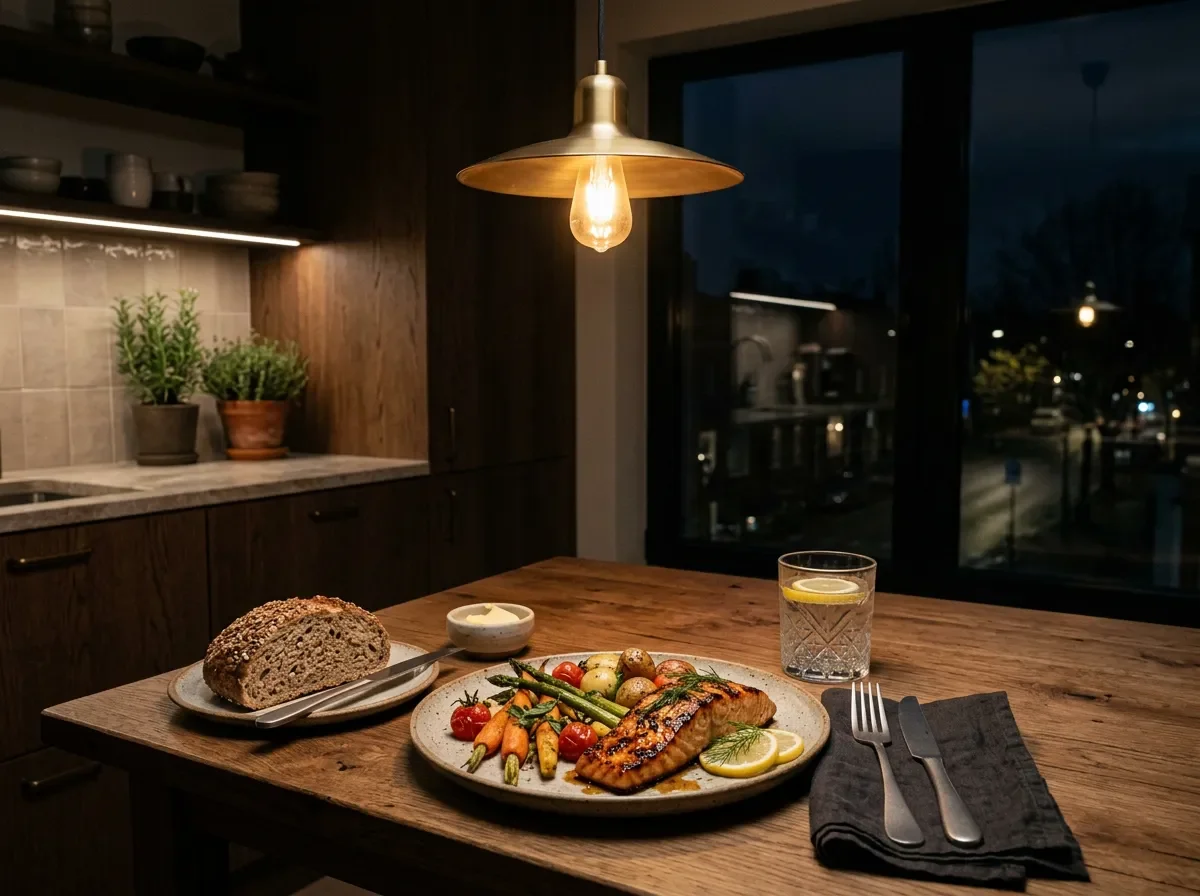
The recovery dinner window (6–8pm) is where your brain rebuilds neurotransmitters, consolidates memory, and restores the glycogen reserves it will spend tomorrow. This guide explains the overnight brain repair mechanism, the three evening eating patterns that drain your morning cognition, and a simple 40/30/30 recovery dinner formula — including how to hit all three macro targets in under 10 minutes with zero meal prep.

Daily Fuel for Peak Performance
2026/6/10 · 21:47
購読 1 件 · コンテンツ 8 件
Your 9am brain is built between 7pm and 7am. If you're only optimizing what you eat during the workday, you're leaving the biggest lever untouched.
Most workplace nutrition advice stops at 5pm. But the recovery dinner window — roughly 6–8pm — is where your brain rebuilds the neurotransmitters, consolidates the memories, and restores the glycogen reserves it will spend tomorrow. Get it wrong, and no amount of perfect morning protein or strategic snacking can fully compensate.
Here's what's actually happening overnight, what the most common evening eating patterns do to your morning cognitive state, and a simple dinner formula that makes the next-day brain sharper before you've even had your first coffee. ⚡

Why your sleeping brain is hungrier than you think

Sleep is not cognitive downtime. During the deep sleep stages — NREM stages 3 and 4 — your brain runs several metabolically expensive processes: flushing neurotoxic waste through the glymphatic system, consolidating the day's explicit memories from hippocampus to cortex, and resynthesizing depleted neurotransmitters like serotonin and dopamine. 1
All of this requires fuel. Brain glycogen — the glucose your neurons store in astrocytes — is the primary energy substrate for these overnight processes. 2 Research from the University of Wisconsin found that astrocytes — the brain's support cells — significantly increase their activity during sleep to clear cellular debris accumulated during waking hours. Skip this maintenance, or go in with depleted glycogen from an inadequate dinner, and you wake up with a brain that never fully restored itself.
The practical consequence: the hollow feeling at 9am that two espressos can't shake isn't a willpower deficit. It's your prefrontal cortex running on a half-replenished tank.

The three evening patterns that drain your morning

統計カードを読み込んでいます…
Pattern 1: Skipping dinner or eating past 9pm. Either extreme strains the same system. Skip dinner and your brain glycogen stores are undersupplied by bedtime. Eat too late — especially a heavy meal close to midnight — and your body spends the first half of sleep on digestion rather than neural maintenance. A 2020 study in Obesity found that late-night eating (within 3 hours of bedtime) was associated with significantly higher nocturnal glucose variability, which correlates with fragmented sleep architecture. 3
Pattern 2: High-GI dinner with minimal protein. The classic "too tired to cook" dinner — pasta, rice, pizza, a sleeve of crackers. Simple carbohydrates spike blood glucose rapidly, but without adequate protein to slow gastric emptying, glucose crashes in the early morning hours (2–4am). This nocturnal hypoglycemia triggers a mild cortisol response that pulls you toward lighter, less restorative sleep stages exactly when you should be in deep NREM. 4
チャートを読み込んでいます…
Pattern 3: Alcohol. Even one drink in the evening suppresses REM sleep in the second half of the night, when emotional memory processing and creative problem-solving consolidation primarily occur. 5 The next morning's "fuzzy" feeling isn't just dehydration. It's the missing REM. Notably, people who drink regularly habituate to the sedating effect but not the REM suppression — the sleep architecture damage persists even when you no longer feel drunk.

The recovery dinner formula

Think of dinner as infrastructure for tomorrow, not just the end of today. The goal is to provide enough complex carbohydrate to top off glycogen, adequate protein to supply amino acid precursors for overnight neurotransmitter synthesis, and anti-inflammatory fats to support glymphatic function.
The formula: 40% complex carb · 30% quality protein · 30% vegetable fiber + healthy fat
ComponentWhy it mattersDesk-ready examples
Complex carbohydrateSustained glucose delivery for overnight glycogen repletionSweet potato, quinoa, brown rice, lentils
Quality proteinTryptophan → serotonin → melatonin pathway; also leucine for overnight muscle protein synthesisSalmon, chicken breast, Greek yogurt, cottage cheese, eggs
Vegetable fiber + fatSlows gastric emptying, blunts nocturnal glucose variability; omega-3s reduce neuroinflammationBroccoli, spinach, avocado, olive oil, walnuts
You don't need to cook a composed meal from scratch every night. The minimum viable recovery dinner is something like:
  • Canned salmon + half an avocado + microwaved sweet potato
  • Greek yogurt + handful of walnuts + a banana
  • Two eggs scrambled + bag of pre-washed spinach sautéed in olive oil + whole grain toast
Each of these takes under 10 minutes, costs under $6, and hits all three macro targets without any meal prep.

The tryptophan window: why dinner timing matters

Tryptophan is the amino acid precursor to serotonin, which your pineal gland converts into melatonin at dusk as light dims. 6 This biochemical chain has a timing lag of roughly 4–5 hours from dietary tryptophan to peak melatonin synthesis.
What that means practically: eating a tryptophan-rich dinner at 6:30–7pm lines up peak melatonin production with the 10:30–11:30pm sleep window that most professionals target. Wait until 9pm to eat, and the tryptophan wave crests at 2am — after you're already asleep, rather than helping you fall asleep.
Good tryptophan sources include turkey, chicken, eggs, cheese, and pumpkin seeds. Pairing them with a moderate carbohydrate portion matters here: insulin released in response to carbs drives competing amino acids out of the bloodstream, allowing tryptophan to cross the blood-brain barrier more efficiently. 7 This is the same mechanism behind the post-Thanksgiving drowsiness — except in controlled quantities, it helps rather than knocks you out.
統計カードを読み込んでいます…

Three structural upgrades (no willpower required)

Upgrade 1: Set a 9pm eating curfew. Not because late calories are metabolically different in any magic way, but because it protects the 3-hour digestion buffer your sleep architecture needs. Put a recurring 8:45pm phone reminder — "Kitchen closes in 15" — until it becomes default. Environment design, not discipline.
Upgrade 2: Front-load your dinner prep investment to Sunday. Batch-cook one complex carb (a pot of quinoa or a tray of sweet potatoes) and keep it in the fridge. Monday through Thursday dinner assembly drops to 5 minutes. The "too tired to cook" problem is really a "zero decision energy left at 7pm" problem — this eliminates the decision, not just the cooking.
Upgrade 3: Replace the evening alcohol with a tart cherry drink. Tart cherries contain naturally occurring melatonin and tryptophan. A 2010 study in European Journal of Nutrition found that adults who consumed tart cherry juice concentrate twice daily saw significant increases in sleep duration and quality. 8 It won't replace deep work on sleep hygiene, but as a direct substitution for a glass of wine while cooking, it's about as low-friction as nutrition upgrades get. 🍒

The 5-window meal framework only works as a system when all five windows close properly. Windows 1 through 4 fuel the workday. Window 5 funds the next one.
What does your current dinner look like — and do you feel the difference the next morning when you eat well vs. skip it? Drop your usual dinner in the comments. 🧠

このコンテンツについて、さらに観点や背景を補足しましょう。

  • ログインするとコメントできます。